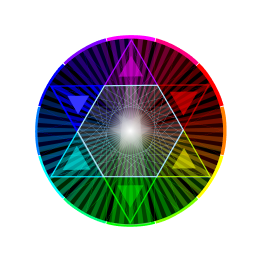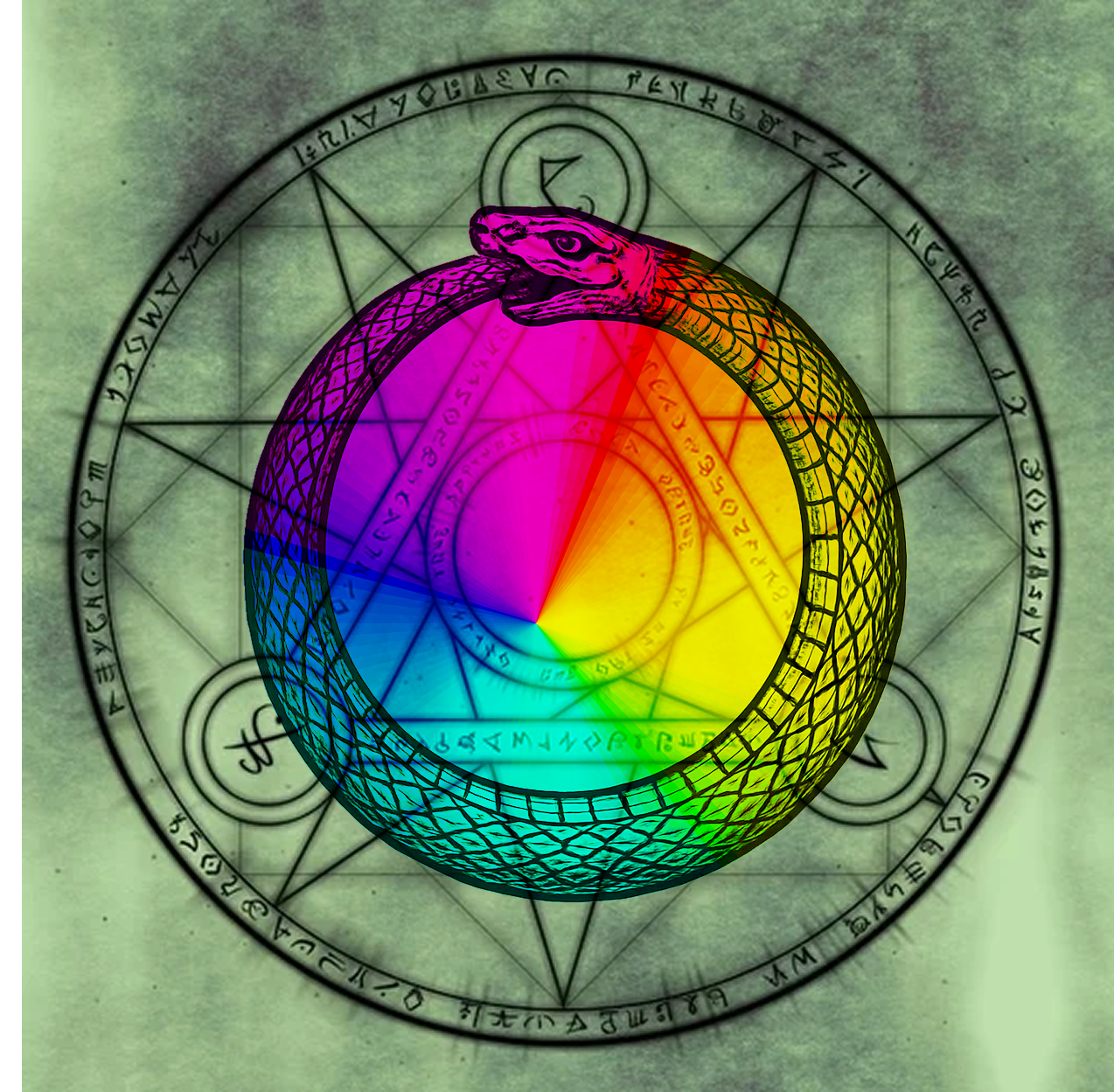
We have been searching for the Alchemy of Color by digging behind the accomplishments and rivalry of two great minds; Goethe was a man of letters, a natural philosopher who nevertheless sought scientific acclaim, even while pitting himself against Newton, the paragon of science in his day. This conflict was exacerbated by Goethe’s assertion of the primacy and depth of human experience over science, which he strongly felt was entirely too reductive in its explanations of the physical phenomena of color.
Despite their opposition in this regard, as we have been finding out, there is also a remarkable practice that both men shared: Goethe and Newton were both secretly avid practitioners of alchemy, which we’ve seen casting a hidden influence over their investigations into color.
Previously, we looked at color naming, and how the act of naming colors itself limits and misdirects our understanding of color. Now, we will examine this from another angle, and see where color naming has occluded an important point of agreement between Goethe and Newton.
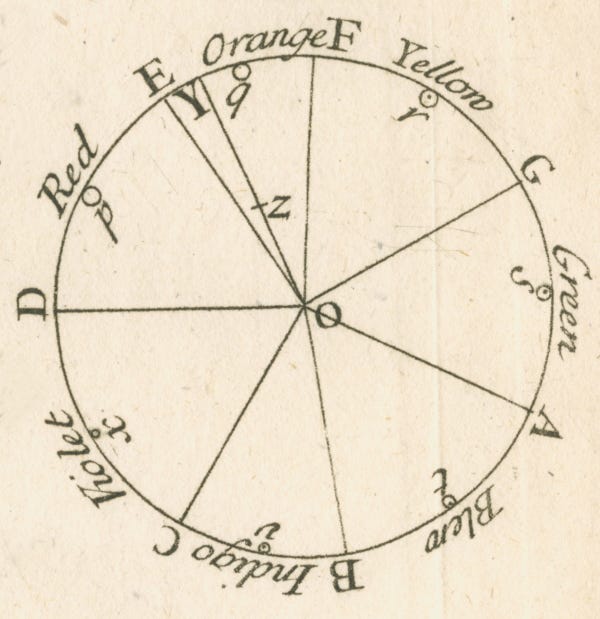
While it seems perfectly natural to us what the names of the spectral colors are, this convention is the result of Newton’s influence in naming the colors of the spectrum; of course, most of us were taught ROYGBIV in middle school, as the colors of the rainbow, but we need to re-examine that naming convention in light of our train of thought here.
Red, orange, yellow and green are seemingly apparent to us; the hidden confusion is BIV, as Newton identified the upper end of the spectrum as blue, indigo and violet. Everybody ‘knows’ what blue is, but what about indigo?
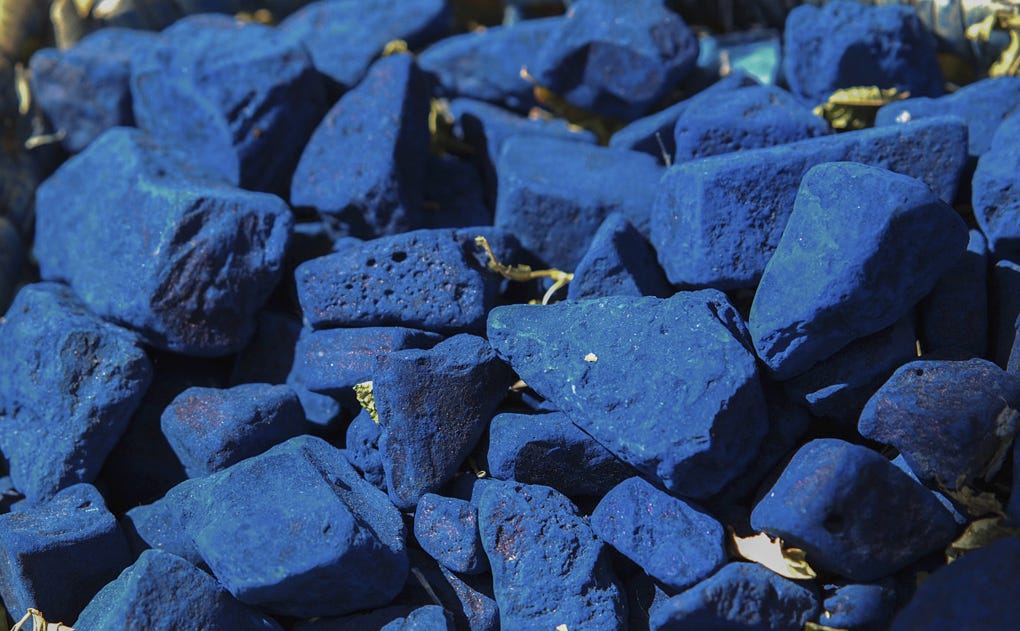
There are two conflicting possibilities: the Indigo plant is notable for its reddish-blue flowers, which seem like a possibility, however, indigo is much more well known for the organic blue dye that is created from it. This appears to look like the canonical deep ‘blue’ that most people associate with the term. But what then of Newton’s blue, the B in BIV?
Closer research indicates that what Newton was labeling blue is closer to the color we now call cyan. Why is this? Newton had no word available for what we now call cyan, because the color itself hadn't been separated out and named yet in English. "Cyan blue" was first recorded in English in 1879, shortened to plain "cyan" by 1889 — roughly 175 years after Newton's Opticks, and over two centuries after his original prism experiments in the 1660s.
In a full circle of color confusion, the Greek root kyanos referred to a dark blue enamel or to lapis lazuli, a deep blue. Cyan itself wasn't adopted into English as a color name until the mass printing era began in the late 19th century, and how it came to define a color between green and blue is a question for another time. Newton had to work with the color names of his time, and since color names and definitions have shifted, this hidden meaning has quietly caused confusion for well over a century.
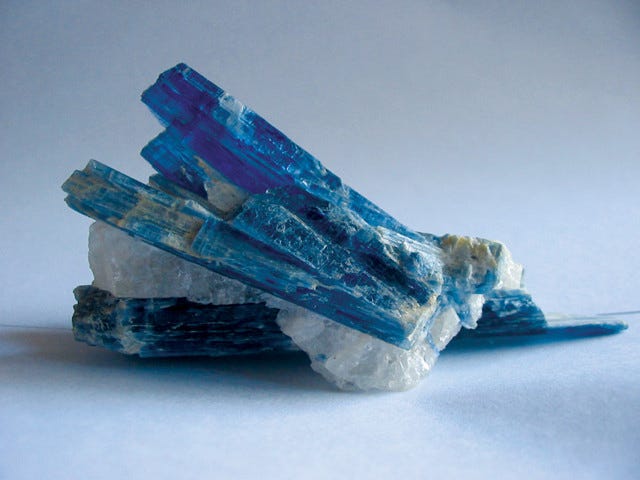
So, Newton’s ‘blue’ is actually cyan in today’s color terms, while Newton’s indigo is now blue!
What’s the impact? Generations of middle school students have learned the colors of the spectrum by using the acronym ‘ROY G BIV’ as a mnemonic device to remember the names of the colors. If we use today’s color names, the spectrum would be red, orange, yellow, green, cyan, blue and violet — however, ROYGCBV doesn’t roll off the tongue so easily!

But there is even more to this angle: Before settling on violet as the last named color in his spectrum, in his early experiments, Newton himself referred to this color as... purple!
And here, amazingly, is where the conflicting minds of Goethe and Newton privately came together in a union of color.
Recall that Newton was the one who famously bent the linear color spectrum into a color circle — why did he do this? He was attempting to make the correspondence between music and color, and so he attempted this by following the conventions of music theory, which also take a linear sequence of notes and form them into a circle, as a means of representing the octave, the point at which a note repeats at double or half frequency.
This makes perfect sense with sound waves, due to the very nature of sound, where tones are congruent across octaves. However, with color, there is no natural union of the two colors at the opposing ends of the spectrum. Colors don’t ‘repeat’ like musical tones. Confronted with this dilemma with no natural answer, Newton proposed an ingenious solution where he arranged two prisms to ‘mix’ the end colors of the spectrum together, and produced a "purple" more vivid than spectral violet — a compound, non-spectral color, distinct from anything a single prism could produce on its own. (Contemporaneously, the eminent scientist Robert Boyle also produced his ‘lovely Purple’ in a similar fashion.)
Newton needed this precisely because red and violet don't actually border each other in nature; the color joining them had to be manufactured. Niels Hutchison describes it well in this passage:
”The new purple was compound and heterogeneous, rather than pure and homogeneous...purple had no place, by rights, among the simple colours of a normal spectral array.”
Even more striking: Newton's own terminology shifted; early on, he called the spectrum's far end "purple." Later, in the Opticks, he renamed that spectral end "violet" and reserved something closer to "purple" for the separate, non-spectral, compound bridging color, ironically matching perfectly to Goethe’s conception of purpur!
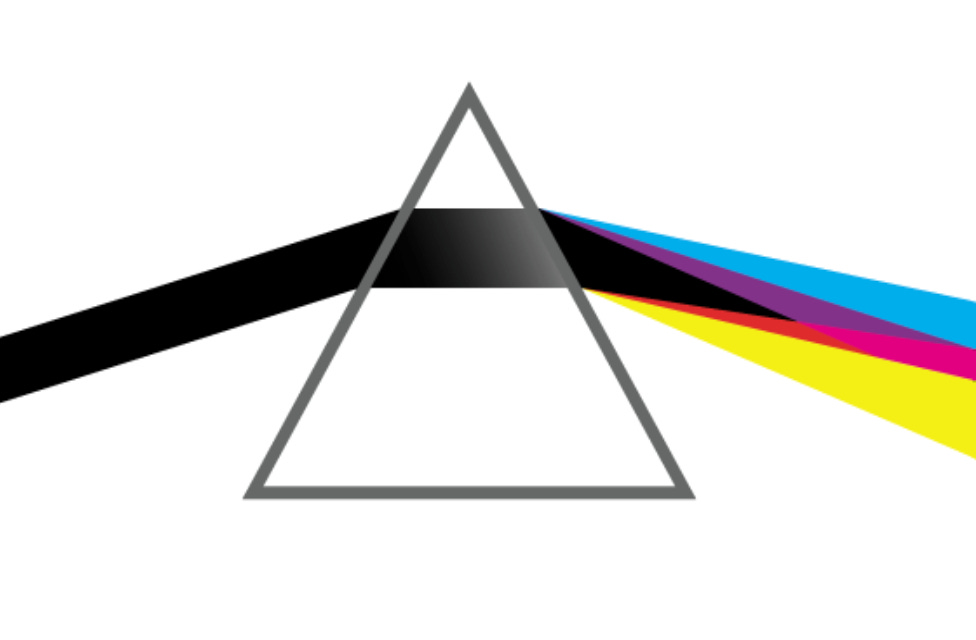
So here’s where it gets even more interesting: both men were working with colored light rather than pigments, producing colors that weren’t capable of being reproduced from pigments. Newton’s color circle famously did not actually represent the colors, only names, so he sidestepped this problem, while Goethe’s color circle actually showed color, and through the limitations of color reproduction, we saw previously how Purpur got lost and Red was read as being the terminal color in both Newton and Goethe’s color circles.
So in this case, both Newton and Goethe arrived at Purpur / purple as the ‘missing’ color needed to connect the ends of the spectrum bent into a circle. And so, despite the differences between the two men, they were actually in agreement on the ‘magic’ color that united the color circle by mixing red and blue. Newton treated it as a necessity, while Goethe elevated it to the highest point of his color theory. And, in this case, science actually supported his conclusion, although it would take many years for science to catch up.
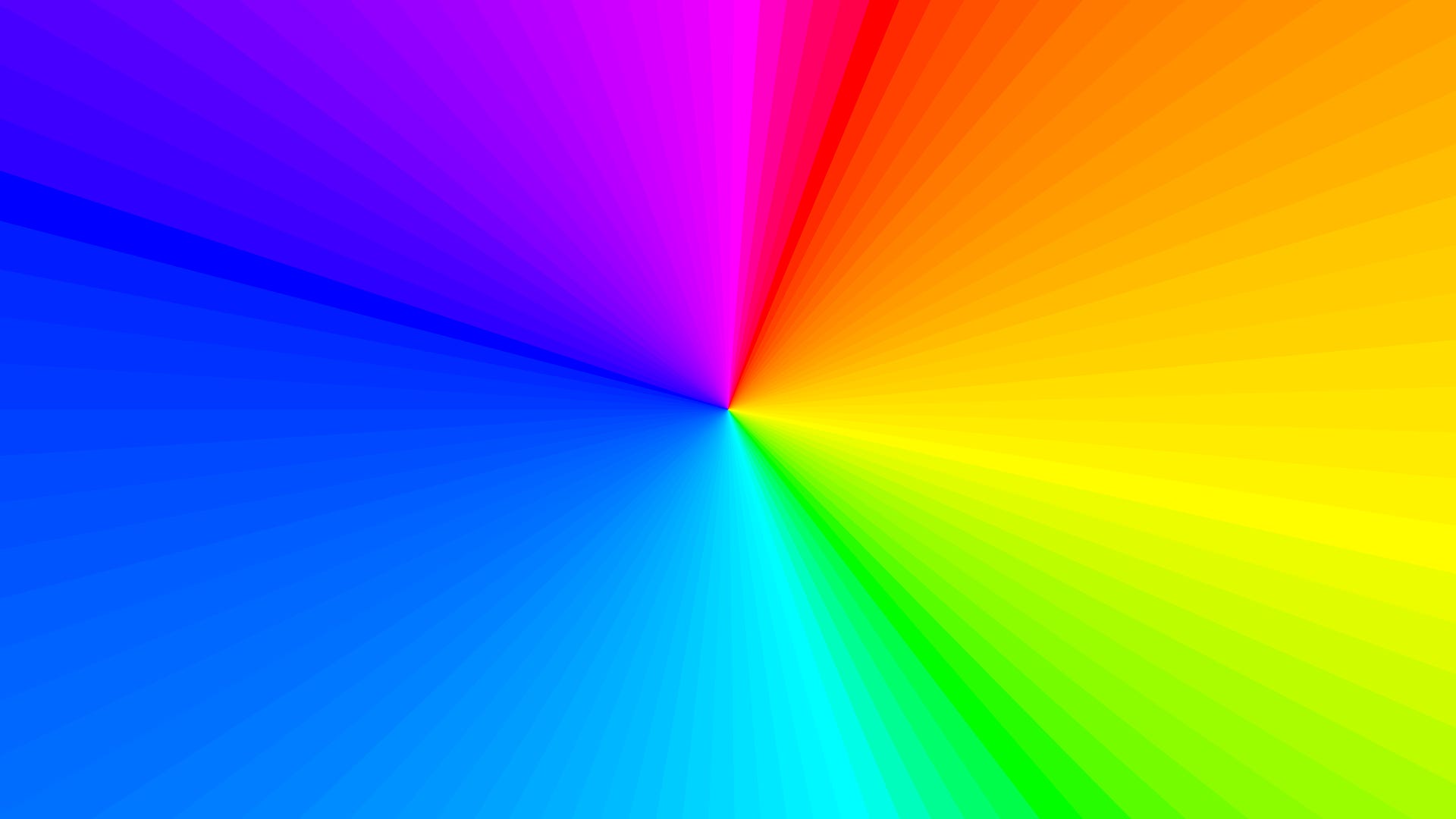
Today, of course, light-based RGB displays give us the capacity to produce magenta, so you can see it here, at the top where Goethe placed it. This radiant color composition shows the transitions between color hues moving around the ‘circle,’ which also illustrates the confusion that we have about color naming. Which blue is blue?

Despite their shared interest in mystical philosophical ideas and the practice of alchemy, Newton became emblematic of the rational anti-mystic establishment of science, which Goethe was challenging as the champion of humanist and supranatural thought. And so, the clash was much more than an argument about color; it was a matter of art versus science, and of who should define our relationship to the world.
From the dominant perspective, Newton appears to have won, if only because Goethe insisted on being judged as a scientist. Much as it appears that science has ‘won’ the mantle of authority in quantifying our world. However, there is much more than appears to the scientific eye, and in the next installment we will examine the artistic influence of Goethe’s color theory.