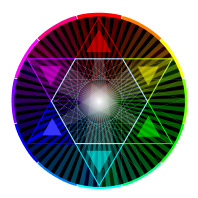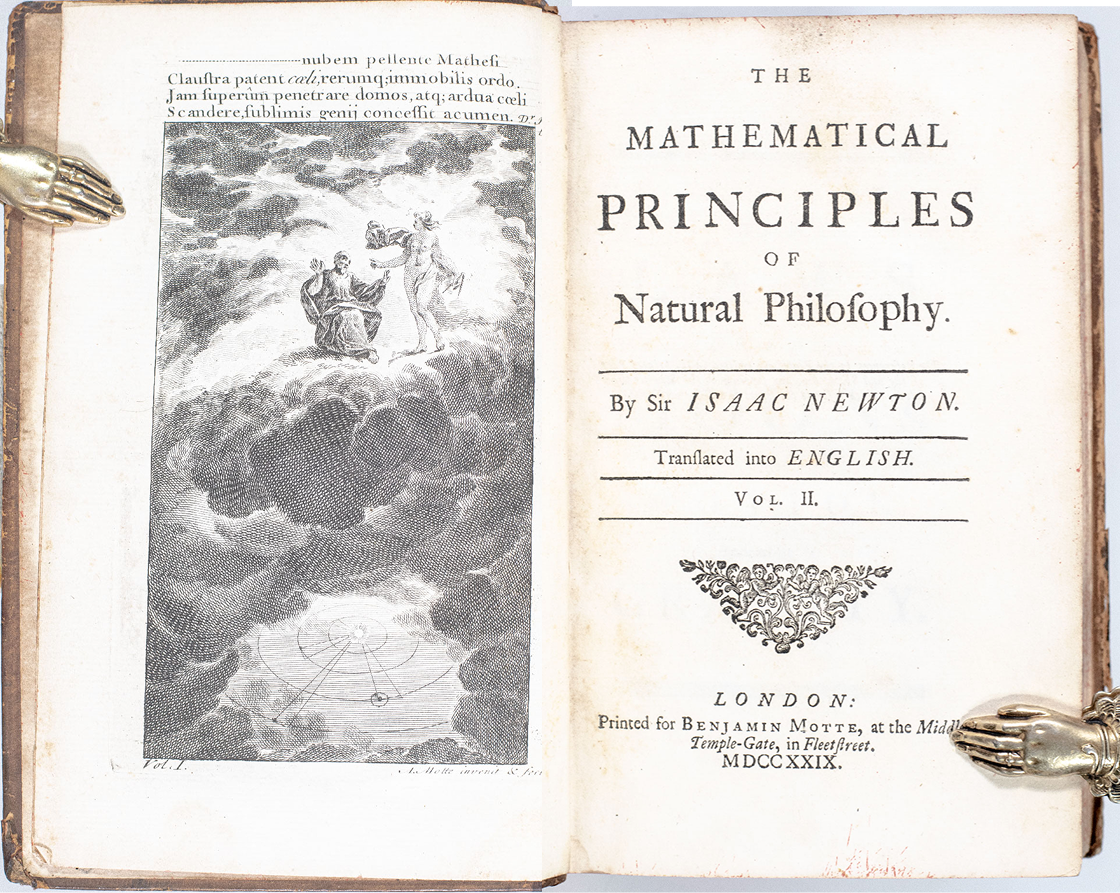
Newton’s intense curiosity, immense intellect, ambition and high personal regard propelled him to great heights, but like other great men, left him susceptible to overreach. In fact, these seem to be inseparable traits, especially in the early days of science.
Since before Aristotle’s time until Newton’s, natural philosophy was the dominant form of systematic inquiry into the physical nature of the world. As the predecessor of science, natural philosophy sought to discover how nature worked, especially the underlying patterns of connections. From the animal kingdom to astrology, there was a sustained effort to describe and catalog all things, and discover the hidden concordances that govern these relationships — the search for universal harmony.
Here, we go back before Aristotle’s time to Pythagoras, the ancient Greek philosopher and polymath, who is credited for discovering many foundational mathematical and scientific principles. None of his writings exist today, but we know of his great works through Plato, Aristotle and other learned Greeks.
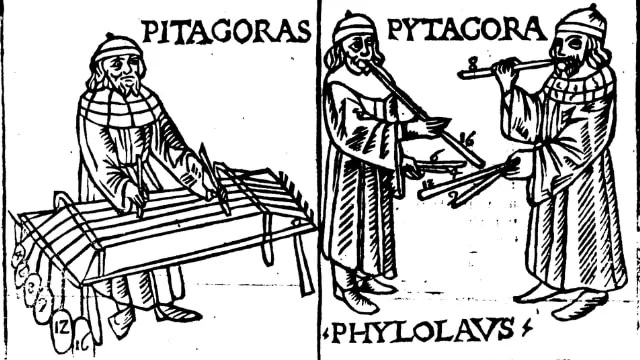
Amongst Pythagoras’ many great discoveries, one stands out for our purposes here — the discovery of the mathematical basis of music. According to legend, Pythagoras first recognized the mathematical basis of music when he passed a blacksmith's workshop and noticed the sound hammers of different weights produced. His observations led him to deduce the numerical ratios that produced harmonious tones.
Pythagoras extended this insight to the cosmos itself; this became the doctrine of Musica Universalis — the music of the spheres. The Pythagorean school of thought believed that mathematics was the foundation of the entire universe, and thought the whole heaven to be a musical scale and number. Music has mathematical structure, therefore mathematical structure is music, and thus everything that has mathematical structure participates in a universal harmony.
Sound is vibration, a rapid movement on an audible wavelength that creates sound waves. When multiple sounds are produced, their waves interact, producing either a harmonious or consonant sound, which is pleasing to the ear, or a dissonant sound, which is disagreeable.
When two sound waves interact, their frequencies either align or conflict. Consonant intervals have simple frequency ratios, which means their waves align regularly and reinforce each other. The result is a smooth, periodic waveform that the auditory system processes cleanly.
Dissonant sound intervals have complex, irrational ratios. When two frequencies are close enough to stimulate overlapping regions of the inner ear, they create neural competition, or beating, that the brain experiences as tension or unease. Thus, certain sound combinations are physically uncomfortable.
From here, the judgement point shifts from scientific to aesthetic. Sound has a particular effect on human hearing, where certain sound combinations can be physically upsetting. This is the pure effect of sound. Music is built on top of this relationship — the aesthetic combination of sounds into consonant relationships and pleasing sequences.
Simple ratios, such as 2:1, 3:2, produce consonance, harmony, and pleasure. The irrational ratio √2:1 physically produces dissonance, unease in the listener’s ear. Mathematics and aesthetic experience seemed to be the same thing. That’s an extraordinary claim, and it appears here to be demonstrably true.
Unlike pure sound, music is subject to taste and cultural differences. In medieval times, The Devil’s Music was what the Church called the tritone, three whole tones and six semitones. The tritone intervals are not simple ratios, but an irrational number. If God’s order was expressed mathematically, then this tritone combination was heretical due to its imperfection.
The discovery of the mathematical relationships of sound and consonance / dissonance supported the growth of music as an aesthetic art form. Music can be described mathematically, but math alone cannot make music. Sound and music are also unique in that their physical effect on people are demonstrable, yet fluid. There are sound combinations that are physically painful, while other combinations, especially in music, are heard culturally. The devil’s tritone, for example, is the basis of blues music and its flattened fifth. The ear that hears this as dissonant is culturally trained.
Music then, brings together three unique aspects — psychoacoustics, harmonic theory, and Musica Universalis. The first two are demonstrably scientific, while the third is philosophical, a world view that is created and overlaid on scientific principles, in order to present a cohesive philosophical framework that contains an agenda. Musica universalis was a philosophical-cosmological tradition that united scientists, philosophers and theologians.
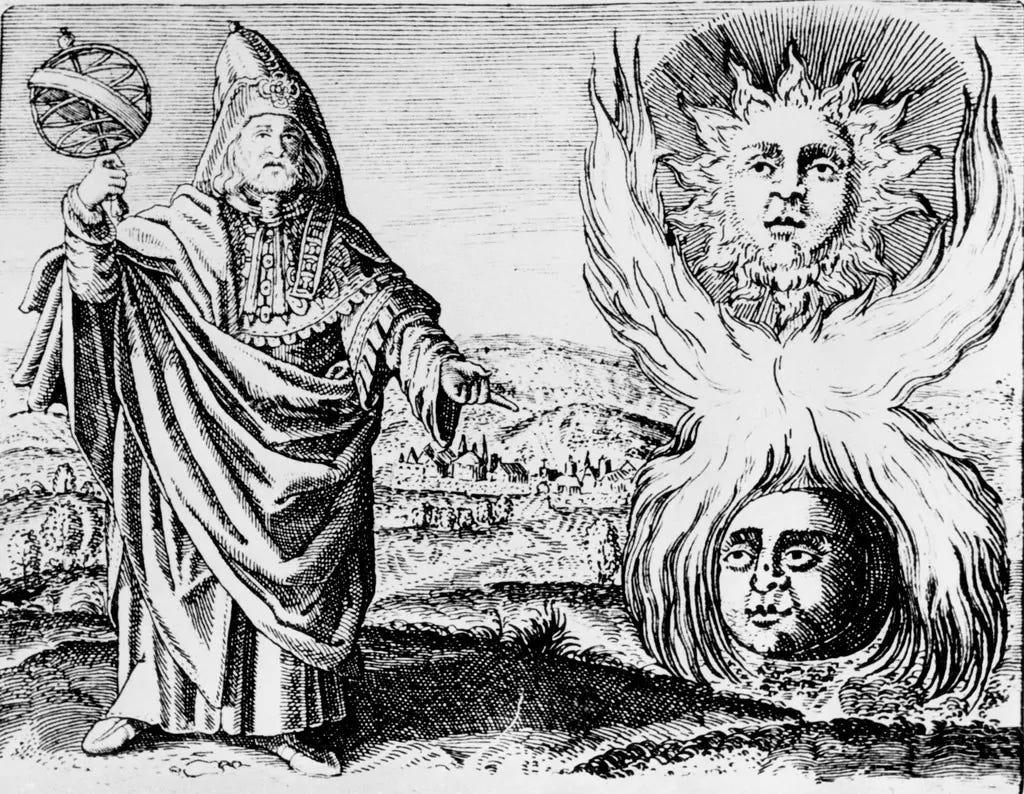
This is a key example of the thread that connects a long line of Western intellectual tradition, characterized by the need to make fundamental statements about the organized principles of the physical world, from Pythagoras to Newton and beyond. It is found in the practice of natural philosophy and science, as well as esoteric hermetic traditions, where it is described by Hermes Trismegistus’ maxim: ‘As above, so below.’ Of course, this principle was later assimilated into the Church by Aquinas, as evidence of God’s infallible handiwork.

Going back to Newton, his work, like many scientists, was aimed at finding the hidden physical rules of the universe, and incorporating them into a cohesive framework of meaning. The Principia offers a prime example — Newton's laws of motion and gravity unified terrestrial and celestial mechanics into a single mathematical framework. That was legitimate and correct. However, Newton then spent years trying to extend that framework further, into chemistry, alchemy, and theology, looking for the same kind of unified law operating at every level of nature.
This was where he found himself with color; After his scientifically rigorous demonstration of the nature of light and color, he overextended himself with sweeping proposals about the nature of matter, force, God, the ether, sensation, and the relationship between light and everything else.
It was at this point that Newton’s desire to find universal concordance led future generations astray about the relationships between colors, that continue to reverberate to this day. Our next installment will reveal Newton’s oversteps and examine why they still matter.