So far in The Alchemy of Color, we have seen seen contention about the true nature of color, with science wresting color away from religion and philosophy. Scientific inquiry moved to the forefront in defining the physical world by adopting rigor and experimentation. The scientific mind prizes structure and repeatability, while eschewing mysticism, while he artist, on the other hand, values qualitative experience and essence, characteristics that cannot be reduced to a formula.
Color sits between both sides.
It is quietly ironic that the practice of alchemy informed both Newton and Goethe, the former considered the paradigm of the scientific mind, the latter the foremost thinker of his age. This is the metaphoric transmutation — where the practice of alchemy was transformed from proto-chemistry to a philosophical, metaphysical framework for working with the base matter of the world.
Goethe’s conception is a constructive phenomenology for approaching color; rather than a set of steps in a scientific experiment, Goethe’s color theory is alchemical, a set of ideas and principles that are applied intuitively, leading to an appearance of color that transcends its material ingredients.
Now, we will take a look at an alchemist of a different kind, an artist who transcended the bounds of his position, who saw the world differently, and who changed the way that we view art — Joseph Mallord William Turner.
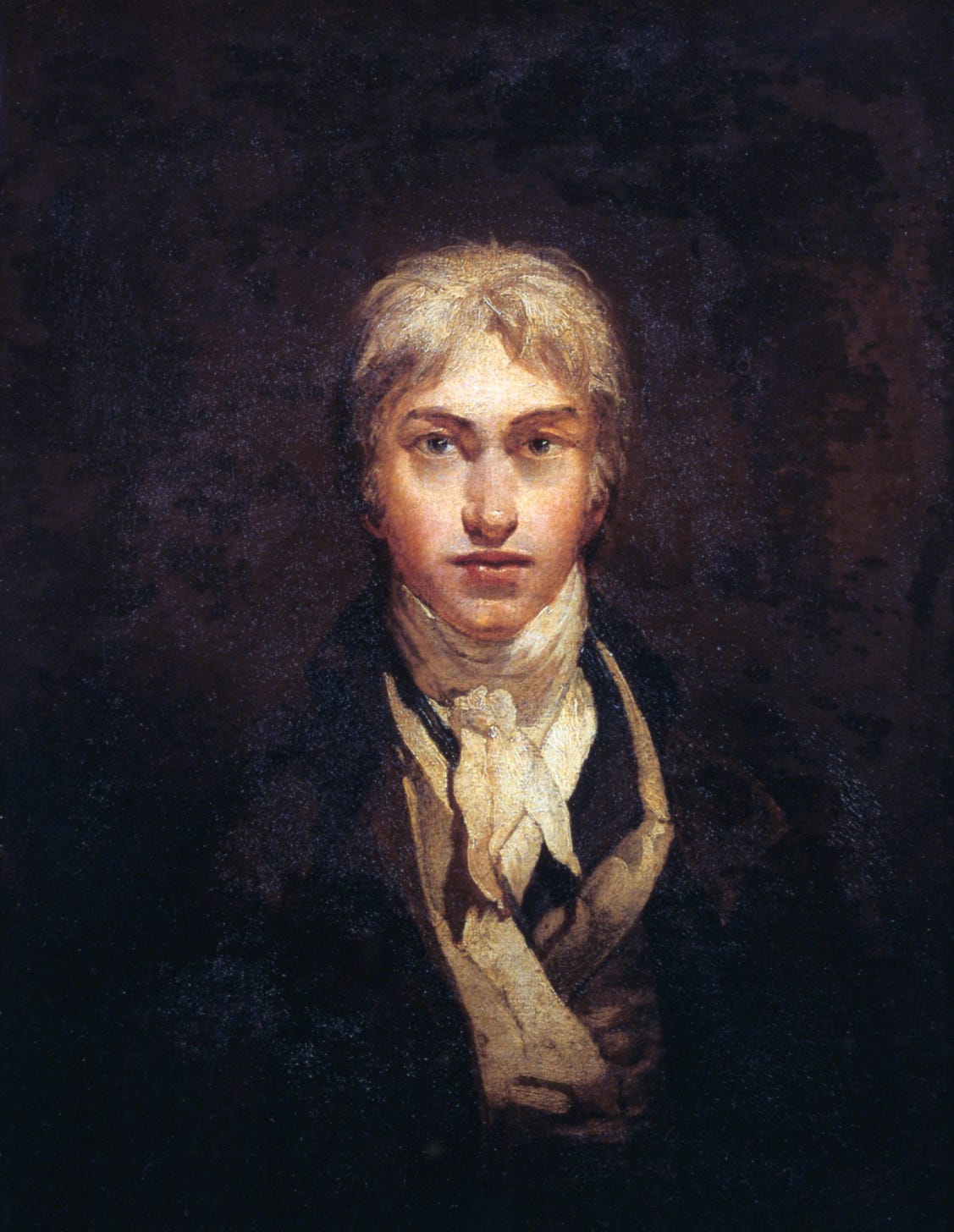
Turner was a genius of another kind. A true prodigy of art, a prodigious painter who was capable of mimicking any style, a classicist painter of the first order who’s restless eye led him to break new artistic ground. Celebrated from an early age, Turner found great popularity and acclaim within the British academic establishment, one of the youngest to be elected as a Royal Academician at the Royal Academy of Arts. After becoming fluent in the style of the Old Masters and being much in demand for his classical works, portraits and landscapes, Turner’s style evolved into a more expressionistic style that was the forefather of abstract art.
While Turner was not an alchemist in the traditional sense, we can see the alchemic way that he approached painting.
He was obsessed with the matter of light and color in his paintings, and experimented constantly with new pigments and color formulations. Historically, pigments and colorants were a rich vein of alchemical practice. Many vivid hues were produced, only to fade or discolor with age. In another parallel, this became the subject of the material science of color, which is to this day focused on formulating consistent and durable color materials.
“Your business, Winsor, is to make colour. Mine is to use them.”
Turner was known to consult scientists about color pigments, notably Michael Faraday. His color supplier, William Winsor, the most famous paint producer, also aided Turner in his search, while worrying that some of his choices wouldn’t last. This has historically been a common problem; artists desire vivid hues, but many of the brightest fade or discolor, which is a problem for the collector. Conservationists have noted this issue in many of Turner’s works, and it’s interesting to consider how much more vivid they appeared at the time.
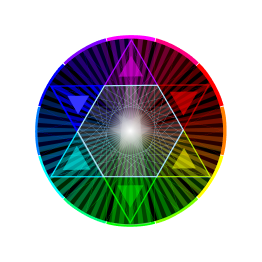
In alchemy, the classic elements, inherited from Greek natural philosophy, are Earth, Water, Air, and Fire . They are forces and qualities, not substances. Being opposed, they interact dynamically, and their mixture together creates the quality of being from moment to moment.
Later in his career, Turner gravitated towards landscapes and the atmospheric effects of light and color. Twilight, fog, haze and smoke, the most ephemeral of phenomena — and what Goethe called ‘the turbid medium’ — became central to Turner’s work. His paintings were literally elemental in the classical alchemical sense. Two examples to illustrate this point:
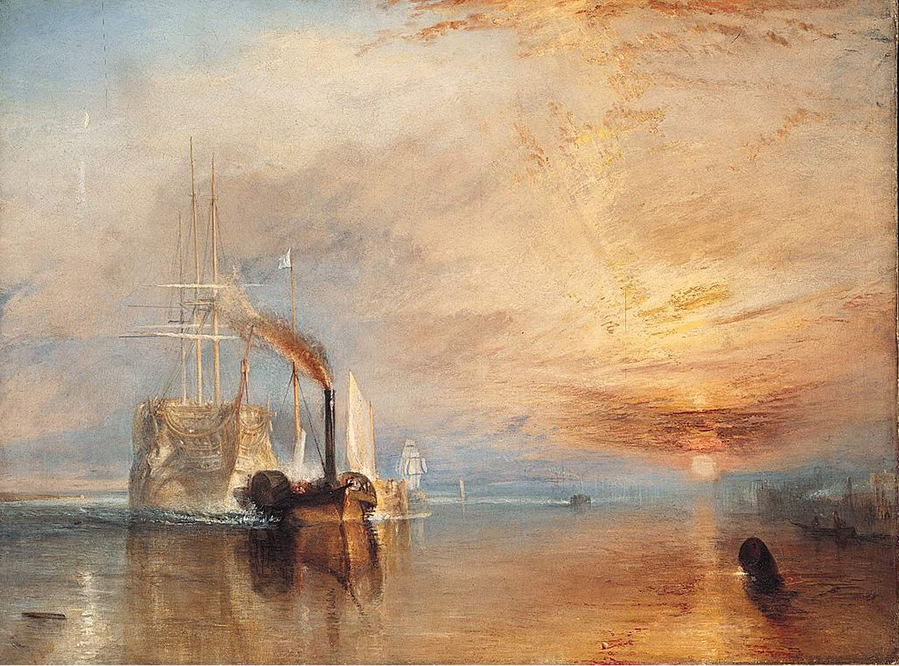
The Fighting Temeraire, painted by Turner in 1838, shows the atmospheric effect of light as it illuminates the elemental scene of water, air and fire, here represented by the setting sun, as it filters through the clouds and reflects off the water, each interaction represented through color.
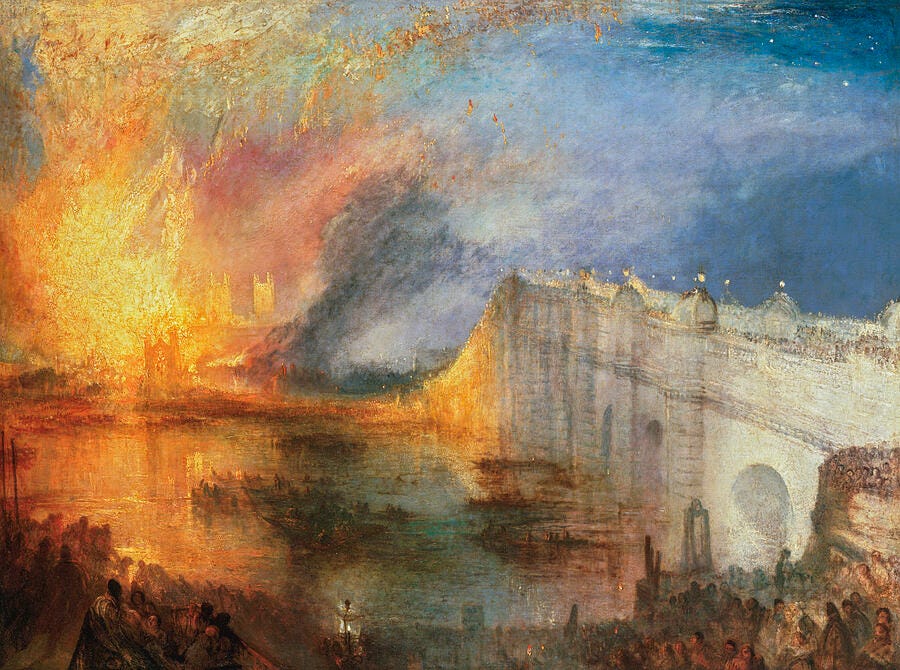
Even more dramatically, The Burning of the Houses of Lords and Commons October 16 1834, portrays literal fire in depicting a real life event that Turner himself witnessed firsthand. The dynamics of fire and water are intensely depicted here, as opposing dynamic forces, while the fire light rages against the night sky.

Turner was younger than Goethe by 26 years, and Goethe was already famous when Turner was born. Goethe published the Farbenlehre when Turner was 35 and established at the Royal Academy. Since the Farbenlehre was published in German, Goethe’s color theory was not mainstreamed into the English market until Eastlake’s translation in 1840, by which time Turner was 65. Goethe was known by reputation and there was filtered exposure to his work. Goethe was known to Turner prior to Eastlake’s translation, but it is safe to say that Turner’s conception of color is better characterized as being congruent with Goethe’s theories, rather than a direct influence.
Turner was given a copy of the Farbenlehre translation by Eastlake, who was a both a friend and longtime colleague. He studied it intensively, and heavily annotated his copy. Turner was not uncritical, he didn’t accept all of Goethe’s premises and conclusions, however, he was sufficiently aligned enough to make two major paintings based on his study.
In 1843, Turner exhibited this matched pair at the Royal Academy:
Shade and Darkness – the Evening of the Deluge
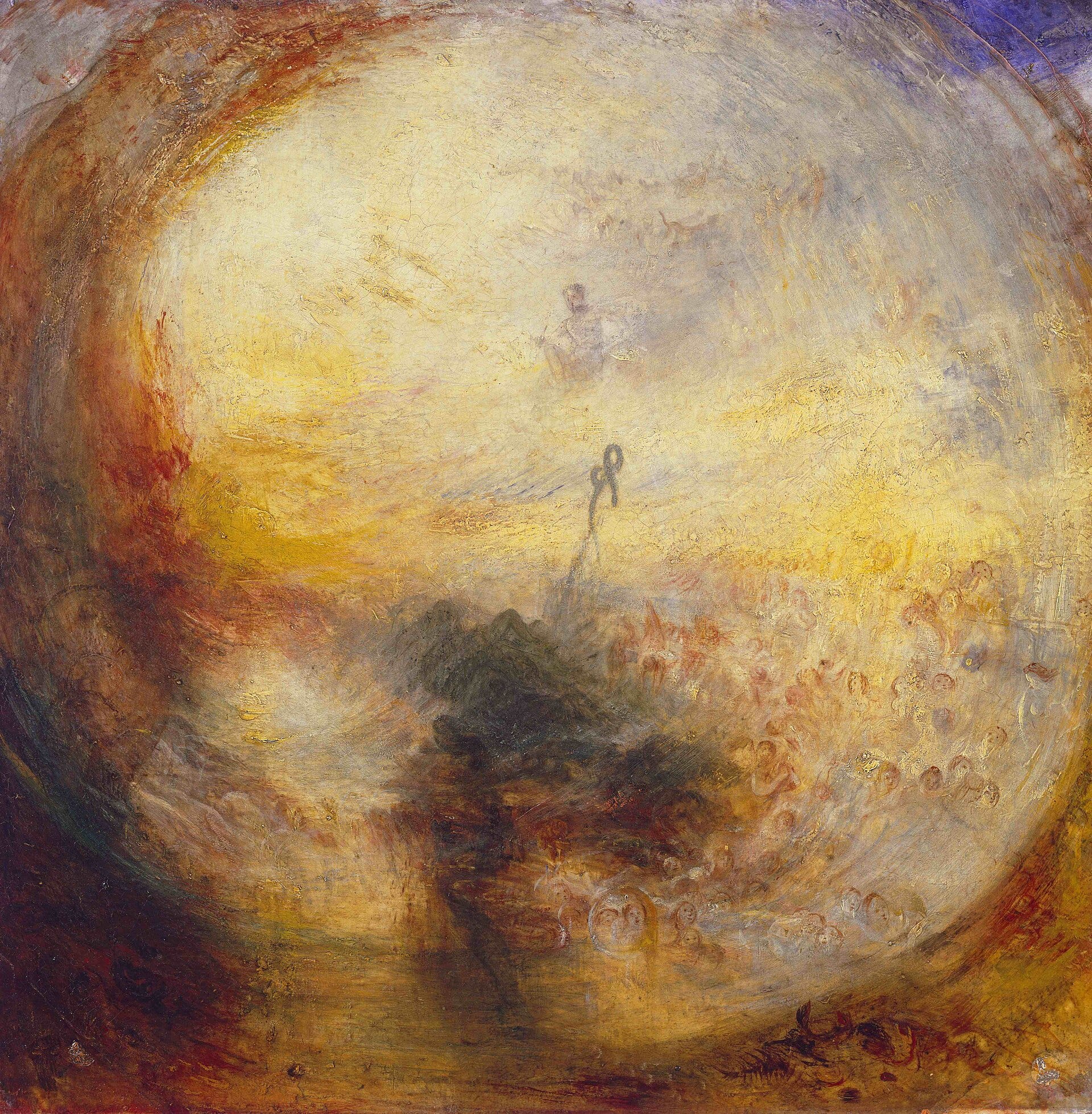
Light and Colour (Goethe's Theory) – the Morning after the Deluge – Moses Writing the Book of Genesis
The pairing itself acknowledges the foundational point of Goethe’s color theory — that color appears from the interplay of light and dark — and that light and dark are the dynamic polarity at the root of appearance.
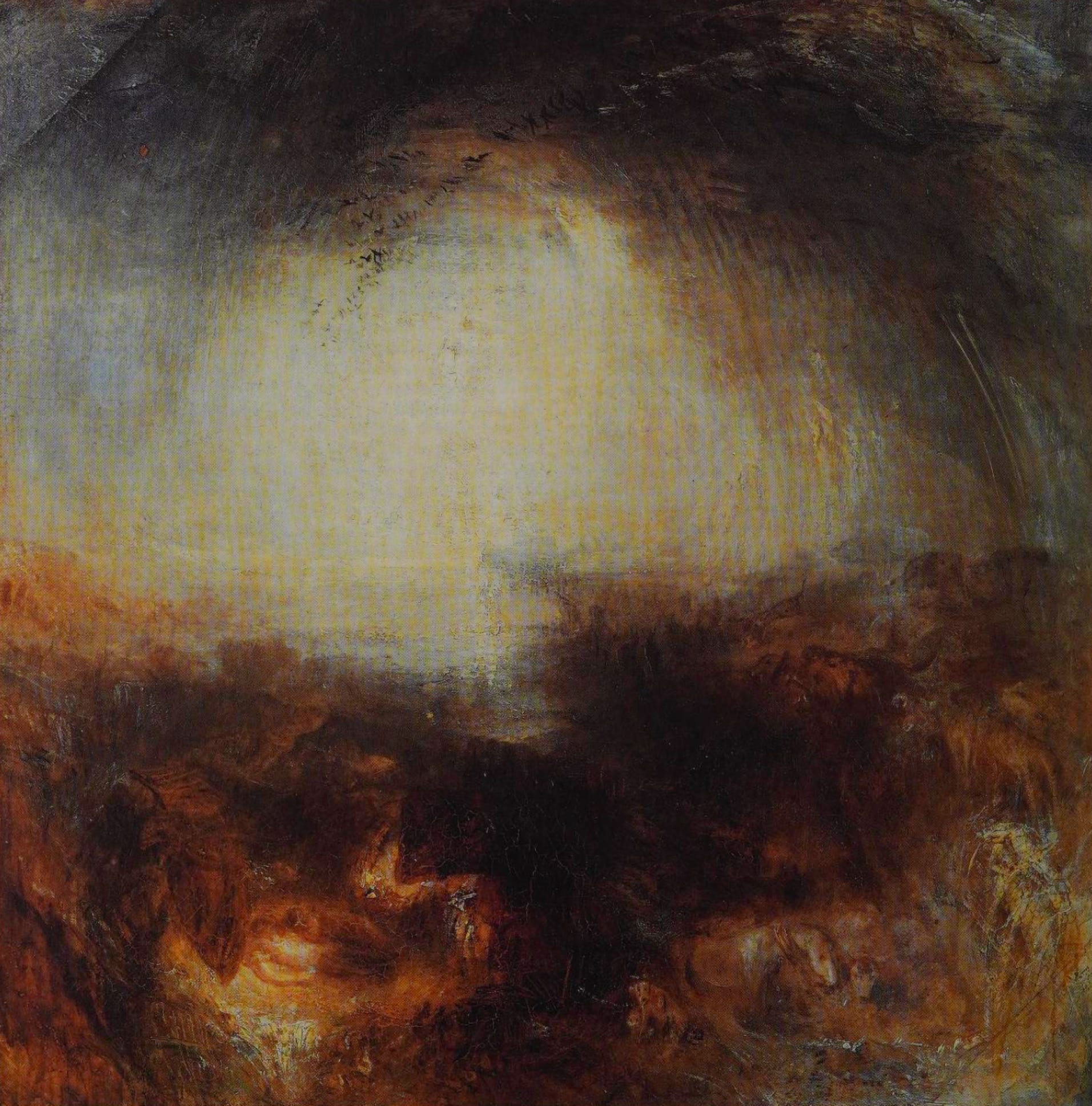
In Shade and Darkness, we see references to Goethe’s primary colors and their associations, blue with darkness and yellow with light. Despite its name and overall tonal quality, it is infused with light, where Turner deftly captured the interplay between light and dark, so that both are seen in conjunction with the other.
Turner found Goethe and Newton’s primary colors too simplistic, based on his own study of nature, and so his own palette is more sophisticated, in that he uses deep shades and light tints. Shade and darkness shows intensification (Steigerung) in the dark rich tones.
Turner creates the appearance of atmospheric color through multiple layers of color washing over a light background. His landscape is only implied at this point, but yet we can feel the elemental forces of air, earth, fire, and water as they interact. This dynamic represents the Coniunctio Oppositorum, or Conjunction of Opposites, the creation of a higher unity that transcends conflicting polarities.
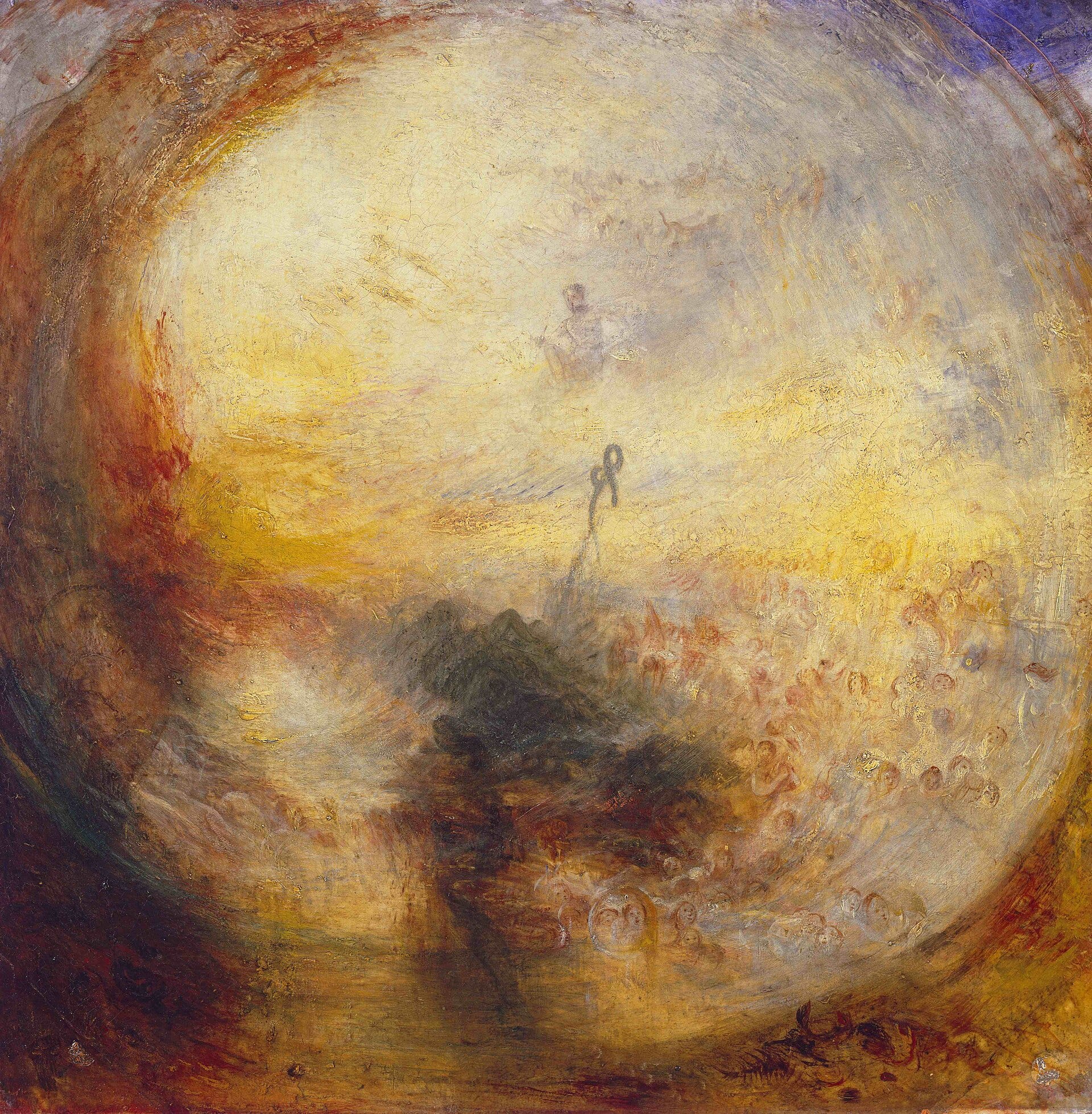
The same elemental and color dynamics are at play in Light and Color as well, but in different proportions, together with a small patch of brilliant blue that quietly brightens the painting, with the palette referencing Goethe’s primary color pair of yellow and blue, albeit with more nuance of tone.
Both paintings show the characteristic circular ‘vortex’ brushwork by Turner, which has the effect of creating a volumetric framing as well as representing the dynamic interaction of being and becoming that make the scenes appear to be continuously unfolding in a circular way.
And so, Turner’s pair represent many things simultaneously: An overt nod to Goethe and his color theory, one that presents a select set of ideas that are presented with the touch of a master who is also displaying his own conception of color interaction between the interplay of light and darkness. Each painting may metaphorically be seen as an alchemical process, between the elemental forces of Air, Water, Earth and Fire. And between them is color.
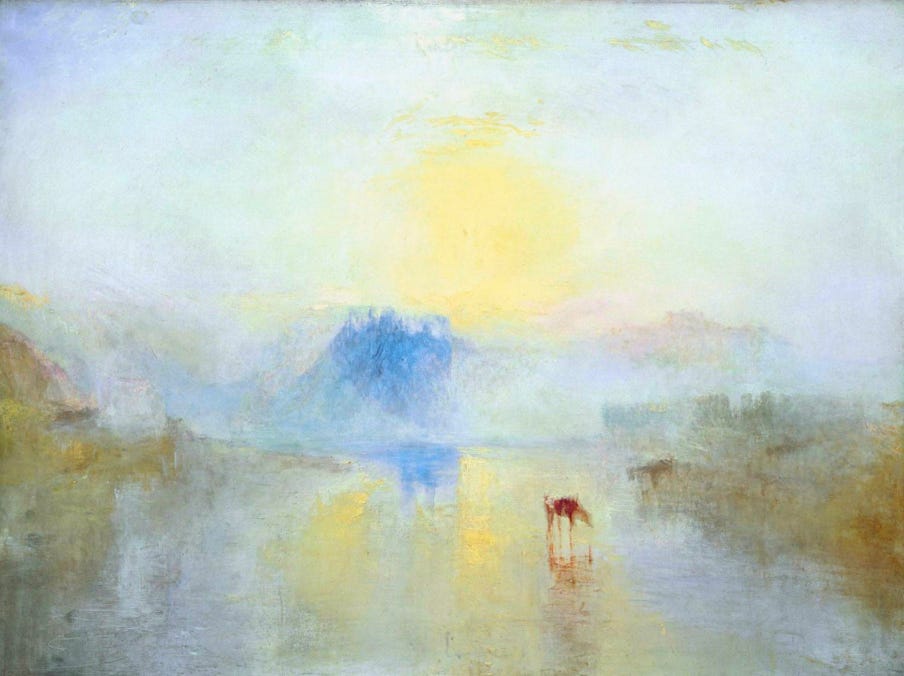
One last Turner masterpiece sits as a coda on this relationship, and the apotheosis of Turner’s life’s work as a painter — Norham Castle, Sunrise. In this landscape painting, which was released posthumously, abstraction has almost completely take over, with only a few deft touches of form and a singular animal form to frame it as such. The color is expressionistic, not obeying the rules of realism, but serving to heighten and intensify the image. The main colors are blue and yellow, in an intense relationship, the power of which does not depend on any question of whether or not this is nod to Goethe. Pure elemental relationships of earth, water, air and fire enhanced by abstraction and punctuated by a remarkable interaction of color at its central point.
The end of Turner’s life was fitting; His bed faced a west window into the setting sun. Eastlake, who was also Turner’s executor, reported that just before Turner died, the curtains were open, as the sun shown through the fog and onto Turner’s face. A few weeks prior, John Ruskin later declared, that at their last meeting Turner remarked, ‘The Sun is God.’ — a remarkable connection, knowingly or not, to the demiurge of the Corpus Hermeticum, and a fitting end for such a master.

Turner was a genius, and an alchemist, of a different kind. Despite being a Professor and teaching at the Royal Academy, he was famously reticent about discussing his own work, and according to a colleague, Turner never stated a single rule about color. So, this is in marked contrast to both Newton and Goethe who were extremely voluble. This also speaks to the very nature of the scientist versus the artist — one tries to explain while the other just shows.